
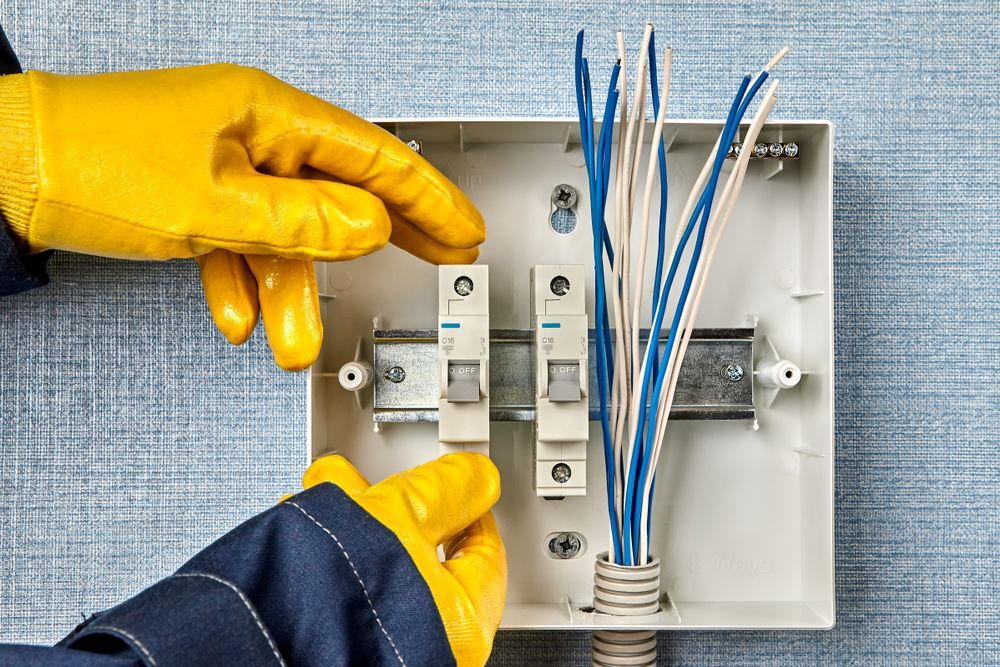
Old Wiring Replaced Before It Becomes a Hazard
Rewiring services in Spearfish for homes with aluminum conductors, cloth-wrapped wiring, or undersized circuits failing under modern electrical loads
Cloth-wrapped conductors and aluminum branch wiring were standard construction materials in homes built before 1980, and many properties throughout Spearfish and the surrounding Black Hills area still have them. Those materials weren't engineered to handle the sustained loads that modern appliances, HVAC systems, and electronics place on residential circuits. Canyon Electric rewires homes and light commercial properties, replacing deteriorated or undersized wiring with modern conductors and circuits sized for current and anticipated demand.
The rewiring process begins with an assessment of the existing wiring to locate undersized runs, degraded insulation, and any components presenting failure or fire risk. Aluminum wiring, for instance, requires specific attention at termination points—aluminum expands and contracts more than copper under load cycling, which loosens connections at outlets and switches over time and creates arcing conditions. For a full rewire, new conduit and wire are run through the framing, outlets and switches are positioned to current code requirements, and everything connects to an upgraded panel or a new subpanel depending on the scope. Partial rewiring is also an option when the concern is limited to specific rooms or circuits requiring higher capacity without replacing the entire home's wiring.
Schedule an on-site wiring assessment to identify which circuits present risk and what scope of work is appropriate for your property.
Why Aging Wiring Fails and What Replacement Fixes
Wiring failure isn't usually sudden. Cloth insulation becomes brittle and cracks after decades of heat cycling, exposing bare conductors inside wall cavities. Undersized copper circuits—14-gauge wire on circuits now carrying 20-amp loads, for example—run consistently warm, accelerating insulation breakdown. Canyon Electric's assessment process identifies these conditions before they produce a fault, using the visible indicators at outlets, junction boxes, and the panel to trace back to the source material throughout the home.
After rewiring is completed, the observable changes are consistent: outlets hold voltage without the warm cover plates that indicate a connection running hotter than it should, circuits don't trip under the loads they're rated for, and lights operate at full brightness without the brownouts that undersized wiring produces when multiple appliances run simultaneously. The work is also coordinated to minimize wall disruption—running wire through existing framing paths where possible rather than opening every surface.
Homes undergoing renovation or addition work are particularly well-suited for rewiring, since framing is already accessible. When walls are open for other trades, adding new wire runs costs significantly less than accessing the same areas afterward. Full rewiring projects are scoped based on square footage, the number of circuits, and the condition of the existing wiring—no two properties are identical, which is why the assessment step precedes any estimate.
Answers to Frequent Rewiring Questions
Rewiring decisions involve real questions about safety, timing, and what the work actually involves. The following addresses what property owners commonly ask before moving forward.
How do I know whether my home's wiring is unsafe and needs to be replaced?
Outlets that feel warm, breakers that trip repeatedly under normal loads, flickering lights on circuits that aren't overloaded, or visible cloth-wrapped wiring in the basement or attic are all indicators that merit a licensed electrician's assessment rather than monitoring.
What is aluminum wiring, and why does it require special attention?
Aluminum branch wiring was widely used in homes built during the 1960s and 1970s; it expands and contracts more than copper under electrical load, which gradually loosens connections at outlets and switches—those loose connections can arc and pose a fire risk if not addressed.
Does rewiring require opening every wall in the house?
Full rewiring involves routing new wire through framing, but experienced electricians work through existing pathways where possible to minimize the number of wall surfaces that need to be opened and repaired.
When is partial rewiring appropriate instead of a full rewire?
Partial rewiring works well when specific rooms or circuits have capacity or safety issues while the rest of the home's wiring is in serviceable condition; an on-site assessment determines which approach fits the actual conditions rather than defaulting to one or the other.
Why is rewiring during a renovation a better time than after construction finishes?
In Spearfish and across the Black Hills region, contractors commonly schedule electrical work to align with framing access—walls open for insulation or drywall work give electricians direct access to run wire without additional demolition costs that apply after the home is finished.
Canyon Electric provides free estimates on rewiring projects with a clear scope breakdown before any commitment is required. Contact the office at (605) 639-0505 to arrange a wiring assessment for your property.