
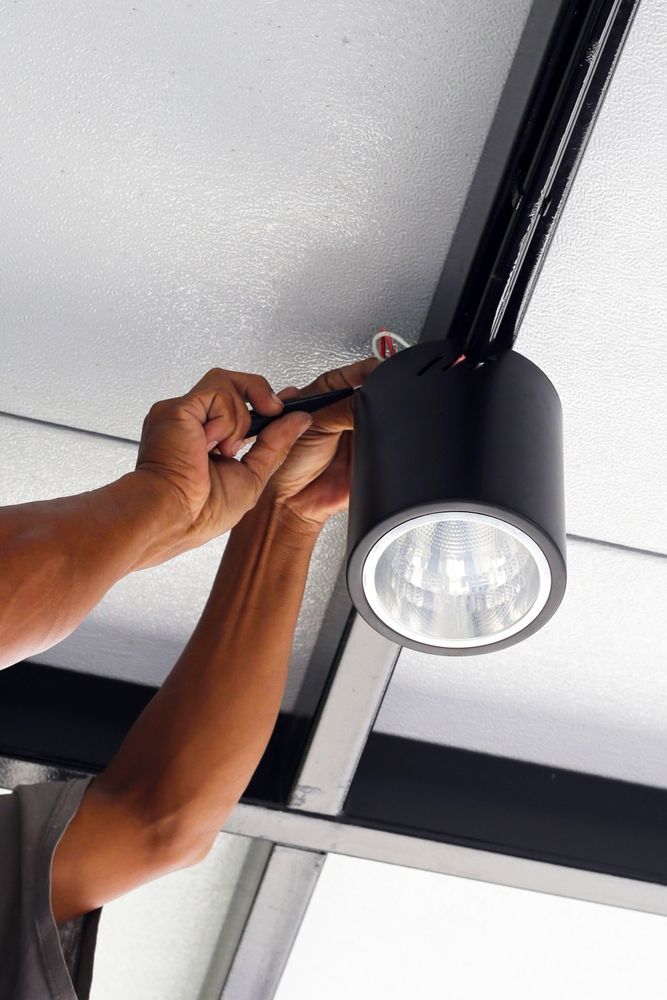
Fixtures Mounted Securely for Long-Term Reliable Operation
Lighting installation in Spearfish for homes and commercial properties where fixture placement, wiring layout, and structural support all affect the finished result
A lighting installation that looks right on day one and functions correctly for years afterward depends on decisions made before a single fixture is mounted. Selecting mounting locations that align visually while landing on framing members capable of bearing the fixture's weight, routing wiring so controls operate intuitively, and matching dimmer switches to the fixture type being controlled are each points where the installation either performs well or creates recurring problems. Canyon Electric installs light fixtures across the full range—from basic ceiling mounts to heavy chandeliers—in Spearfish homes and Black Hills commercial properties, treating each of those decisions as part of the installation rather than afterthoughts.
The process begins with evaluating the existing wiring layout and identifying mounting locations that satisfy both visual alignment and structural support requirements. For heavy fixtures like chandeliers, a rated ceiling medallion box or brace kit anchored directly to framing is required—standard electrical boxes are not rated for fixtures exceeding 35 pounds, and installations that skip this step create a safety hazard that is not visible once the fixture is hung. Conduit and new wiring are installed where the existing layout does not reach the intended location, and all controls are tested before the job is complete.
Request a free estimate to review your fixture placement goals and assess what your current wiring layout can support.
What Thoughtful Lighting Placement Actually Accomplishes
Placement decisions vary meaningfully by room function. Kitchen lighting is planned around task surfaces—islands and countertops need focused overhead light that eliminates shadows in work areas, which means fixture positioning relative to the cabinet layout matters as much as fixture type. Living spaces benefit from dimmable ambient sources positioned to produce even coverage without hotspots directly below the fixture. Workspaces and utility areas require sufficient foot-candle levels to operate safely, which depends on ceiling height, fixture lumen output, and spacing between fixtures rather than simply adding more lights to the ceiling.
After Canyon Electric completes an installation, controls respond correctly to their intended fixtures, dimmer switches are paired to compatible LED or incandescent loads to prevent flickering or buzzing, and fixtures are secured firmly enough that they do not shift or vibrate over time. Architectural features that benefit from accent or directional lighting are illuminated without creating glare in adjacent spaces.
Installations that involve multiple fixture types in a single project—recessed cans, pendants, and undercabinet lighting, for example—require wiring planned so each type can be controlled independently. Grouping dissimilar fixture types on a single switch or dimmer creates compatibility issues that reduce both control functionality and fixture lifespan, so circuit planning at the wiring stage prevents those problems from appearing after installation is complete.
Common Questions About Fixture and Lighting Installation
Property owners in Spearfish commonly ask about what separates a straightforward fixture swap from an installation that requires new wiring or structural reinforcement—the questions below address those distinctions directly.
How is the right mounting location selected for a ceiling fixture?
Mounting location is determined by structural framing position, visual centering relative to the room or feature being lit, and the minimum clearance requirements for the fixture type—recessed fixtures have specific insulation clearance ratings that determine where they can be safely installed in insulated ceilings.
What makes a chandelier installation different from a standard ceiling fixture?
Chandeliers exceeding 35 pounds require a fan-rated or fixture-rated ceiling box anchored directly to a joist or rated brace kit—standard boxes installed for lightweight fixtures are not rated for that load and can fail over time as connections loosen.
Why do some dimmer switches cause LED fixtures to flicker or hum after installation?
Older or incompatible dimmer switches are designed for resistive incandescent loads and do not communicate correctly with the driver circuitry in LED fixtures—matching dimmer to fixture type during installation prevents that problem entirely.
When does adding a new light fixture require running new wiring rather than connecting to an existing circuit?
When no switched circuit exists at the intended mounting location, or when the existing circuit is already loaded close to its rated capacity, new wiring from a panel circuit or a junction point on an appropriate branch circuit is required.
How does Black Hills climate affect exterior lighting installations in Spearfish?
Exterior fixtures in this region are subject to significant temperature swings between summer and winter, so junction box sealing, weatherproof-rated fixtures, and conduit fittings appropriate for freeze-thaw cycling all factor into installations that last without requiring early maintenance.
Canyon Electric handles lighting installations from single fixture replacements to full-room layout projects, with free estimates that cover fixture assessment and wiring requirements before any work begins. Call (605) 639-0505 to set up a site visit and discuss your lighting goals.